Endometriosis
A condition in which tissue similar to the lining of the uterus grows outside the uterus. It can cause pain and, in some cases, may affect fertility.
Infertility
A medical condition in which pregnancy does not occur after a period of regular unprotected intercourse. The recommended time before seeking assessment may depend on age and individual circumstances.
Fertility assessment
A medical evaluation used to assess reproductive health and identify factors that may affect the ability to conceive.
In vitro fertilisation (IVF)
A fertility treatment in which eggs are fertilised with sperm in a laboratory and the resulting embryo is later transferred to the uterus.
Egg freezing
A fertility preservation method in which eggs are collected, frozen and stored for possible use in the future.
Dyspareunia
Pain experienced during or after sexual intercourse. It can be associated with several gynaecological conditions, including endometriosis.
Reproductive age
The stage of life during which a person is biologically capable of conceiving, although fertility naturally changes with age.
Assisted reproduction
Medical treatments and procedures designed to help achieve pregnancy, including IVF and related techniques.
Multidisciplinary approach
A model of care in which specialists from different medical fields work together to assess and treat a patient.
Fertility preservation
Methods used to help protect the possibility of having biological children in the future, such as egg, sperm or embryo freezing.
Gynatal Clinic took part in the “Endometriosis & Infertility” event
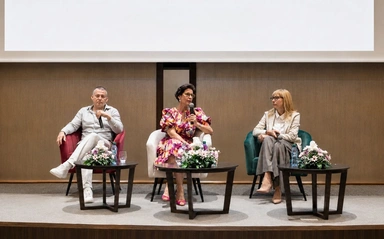
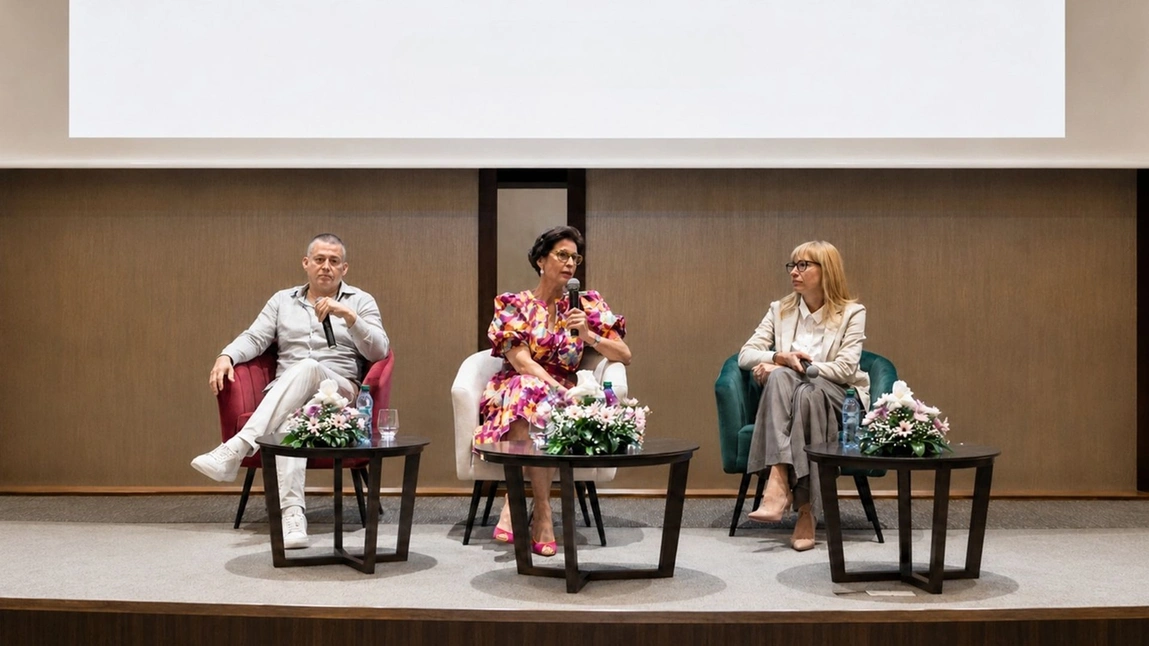
On 22 May, Gynatal Clinic attended the “Endometriosis & Infertility” event held at Iulius Congress Hall in Timișoara and organised by Neoevents | She Talks.
The event brought together doctors from complementary medical fields, including specialists in endometriosis, infertility, surgery, nutrition and embryology, highlighting from the outset the importance of a multidisciplinary approach.
Gynatal was represented in the discussion panels by Dr Florin Dorneanu (Medical Director, Consultant in Obstetrics and Gynaecology, specialising in IVF), Assoc. Prof. Dr Delia Huțanu (Senior Embryologist) and Dr Cezara Mureșan (Consultant in Obstetrics and Gynaecology, with expertise in couple infertility treatment and assisted reproduction).
Endometriosis: A Common Condition That Is Often Diagnosed Late
Around 1 in 10 women of reproductive age is affected by endometriosis.* Despite its high prevalence, diagnosis is often delayed, and symptoms may sometimes be overlooked or misinterpreted.
The impact on fertility can be significant:
- approximately 30–50% of women with endometriosis may experience difficulties becoming pregnant;**
- 25–50% of women undergoing investigation for infertility are diagnosed with the condition.**
*According to the World Health Organization
**According to the ESHRE Endometriosis Guideline Development Group and Bulletti C., Endometriosis and Infertility.
These figures highlight the importance of accurate information and early diagnosis.
The Link Between Endometriosis and Infertility
Dr Florin Dorneanu explained that although endometriosis is commonly associated with infertility, it does not automatically mean that a woman will be unable to have children.
“First of all, I would like to emphasise that infertility is a medical condition. When a woman or a couple experiences infertility, it should be treated as a medical issue.”
Dr Florin Dorneanu also highlighted that endometriosis is now seen much more frequently among couples experiencing infertility than in the past and can affect very young women as well.
“Among the causes of couple infertility, which may involve either female or male factors, endometriosis is also an important consideration. Thirty years ago, you might have encountered endometriosis in only one in ten infertile couples, whereas today the condition is much more common and is also seen in very young women. At present, approximately 25–50% of couples experiencing infertility also have endometriosis.
On the other hand, not every woman with endometriosis is infertile. We should therefore not automatically equate endometriosis with infertility.
In the early stages, fertility is generally not affected. Problems are more likely to occur in advanced stages, when egg quality may decline and anatomical changes or inflammation can affect the reproductive system.
It is important for women diagnosed with endometriosis who wish to have children to see a fertility specialist for a comprehensive fertility assessment. In some situations, IVF may need to be considered promptly in order to preserve the possibility of achieving pregnancy.
For women who do not currently have a partner, egg freezing may also be recommended so that the eggs can potentially be used later if fertility becomes compromised.”
Warning Signs Patients Should Not Ignore
Dr Cezara Mureșan drew attention to symptoms that should prompt women to seek medical advice, particularly when pain becomes severe or starts to affect quality of life.
“Over time, pain may become increasingly frequent – initially it may occur with every menstrual period, but it can later extend beyond menstruation and eventually become persistent. In some cases, it can significantly interfere with a patient’s daily life: the pain can be extremely distressing, affect both day and night, disrupt sleep and make normal activities difficult. […] Not every case of menstrual pain means endometriosis, but severe pain should not be ignored.”
Another symptom frequently associated with the condition is dyspareunia, meaning pain during sexual intercourse, which may also negatively affect a couple’s relationship.
These are two of the main warning signs that patients should be aware of and that should prompt them to seek medical advice. Endometriosis is not diagnosed in every patient with these symptoms, but both patients and healthcare professionals should be aware that pain may sometimes be caused by endometriosis.
The discussion also addressed in vitro fertilisation (IVF), a treatment often associated with hope but also surrounded by many misconceptions. Assoc. Prof. Dr Delia Huțanu explained that the success of the procedure depends on many individual factors.
“There is no medical procedure that can guarantee pregnancy. IVF does not automatically mean success,” she said.
The patient’s age, the type of condition involved and their medical history are all important factors when assessing realistic chances of success.
An Integrated Approach Is Essential for Patients
One of the key messages of the event was the importance of an integrated approach to the management of endometriosis.
The specialists emphasised that this complex condition requires interdisciplinary collaboration, with different healthcare professionals contributing to the patient’s overall care.
It is essential that women diagnosed with endometriosis, especially those who wish to become pregnant, receive clear and comprehensive information about their fertility options.
In this context, a fertility specialist will usually become involved after the initial gynaecological assessment and before any potential surgical procedure, helping the patient make fully informed decisions.
The patient’s gynaecologist, an endometriosis specialist and a fertility specialist have complementary roles, with each contributing their expertise to the development of an individualised treatment plan tailored to the patient’s needs.
The shared goal of the multidisciplinary team is not only to relieve symptoms, but also to protect and, where possible, preserve the patient’s future fertility options.
The event was also featured in the local media on tion.ro.