TH1/TH2 Cytokine Balance
The Immune Logic of Pregnancy at Gynatal
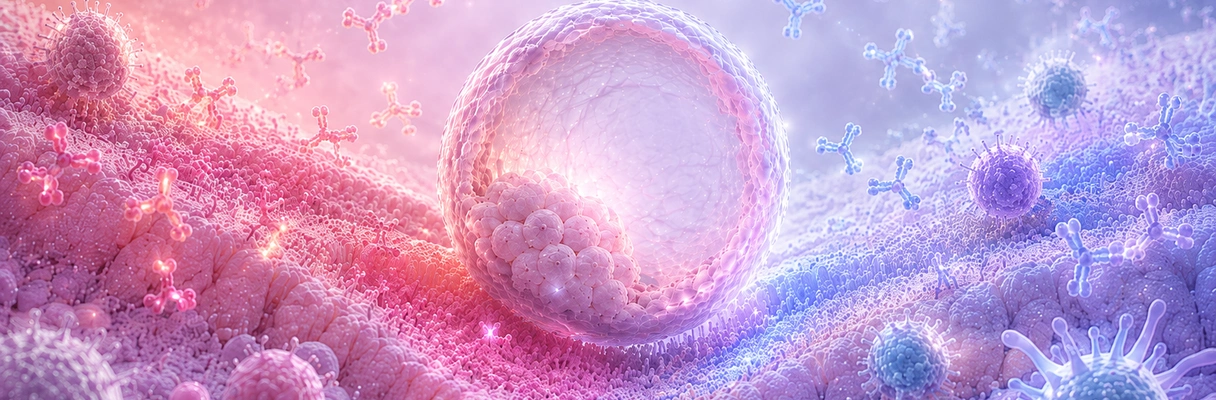
The TH1/TH2 balance at Gynatal Clinic (Timișoara) is a specialized immunological assessment of the mother’s T-helper cell response. A dominance of pro-inflammatory TH1 cytokines can lead to embryo rejection, while a TH2-dominant environment is essential for successful implantation. Managed by our immuno-hematology team, balancing these factors through personalized therapy significantly improves IVF success in complex cases.
The TH1/TH2 Switch in the Implantation Flywheel
For a successful pregnancy to occur, the maternal immune system must undergo a critical "immunological switch." While the body's standard defense mechanism relies on TH1 cells to fight viruses and bacteria, a successful pregnancy requires the suppression of this response in favor of TH2 activity.
TH1: Pro-inflammatory Response (Risk of Rejection)
An overproduction of TH1 cytokines (particularly TNF-alpha and Interferon-gamma) in the uterine environment can create a "toxic" atmosphere for the embryo. This may prevent even a genetically embryo—verified through ni-PGT-A—from successfully implanting.
TH2: Anti-inflammatory Response (Support for Tolerance)
TH2 cytokines (such as IL-4 and IL-10) are responsible for inducing immunological tolerance. They "persuade" the maternal immune system to accept the embryo as part of the body, allowing for proper placental development and a healthy pregnancy.
Precision Diagnostics: Assessing the Cytokine Ratio
At Gynatal, we follow the principles of Information Foraging, providing patients with a clear diagnostic roadmap to identify this "invisible" barrier to parenthood:
- Intracellular Cytokine Staining: A specialized blood test that measures the ratio of TH1 vs. TH2 cytokine production within lymphocytes.
- Clinical Indications: We specifically recommend this testing for patients with a history of Recurrent Pregnancy Loss (RPL) or after two or more unsuccessful IVF cycles involving high-quality blastocysts.
- Synergy with NK Cells: TH1/TH2 results are always interpreted alongside Natural Killer (NK) cell activity, a core specialization of our Hematology department led by Dr. Ghilezan Florica.
Immunomodulatory Management at Gynatal
If diagnostics confirm a TH1 dominance (an inflammatory profile), our medical team designs targeted protocols to restore immunological balance:
- Intralipid Infusions: These help dampen excessive NK cell activity and reduce the production of pro-inflammatory TH1 cytokines.
- Corticosteroid Therapy: Utilizing low-dose prednisone to modulate the overall immune response during the critical peri-implantation window.
- Specific Biological Agents: In highly indicated cases (such as extremely elevated TNF-alpha levels), therapies focused on neutralizing specific cytokines may be considered.